Showing posts with label food. Show all posts

Sunday, February 1, 2009

Eating in Fiji - overview

The Fijian cuisine in pre-colonial times consisted of root crops, vegetables, fruits, and various land animals such as wild pig and birds. The coastal tribes would have had the same, adding a large amount of local seafood. These was prepared with local herbs and spices on wood fire rock ovens.
Cooking areas were located in the center of house so the smoke would repel insects and strengthen the roof thatching.
Another popular method of cooking, which is still used today, is the lovo which is an earth oven —a fire made on in a pit in the ground lined with heat-resistant stones. It closely resembles the hangi of the New Zealand Māori. When the stones are hot, food, wrapped in (banana) leaves, is placed in the pit, covered with soil and left to cook before being exhumed and eaten.
Dishes cooked this way include palusami (parcels of taro leaves saturated with coconut milk, onions, and sometimes tinned meat)
Ceremonial cannibalism was also performed. Not so much for sustenance but more as a means to humiliate your enemy by consuming him. This practice is now extinct. An English missionary’s death in 1867 was the last recorded incident of cannibalism in Fiji.
Modern Fijian Cuisine is diverse with great influence from Indian, European and Chinese cooking and spices. When these are applied to local traditional dishes, it makes for interesting eating. Most, if not all Fijian households, merge these cooking-habits daily.

Eating in Fiji - Daikoku

There are two dining areas at this authentic restaurant, which was prefabricated in Japan and reconstructed here. Downstairs is the sushi bar, which uses only the freshest salmon, tuna, and lobster. Upstairs is the teppanyaki room, where the chef will stir-fry vegetables, shrimp, chicken, or extraordinarily tender beef as you watch. You can also order sukiyaki, udon, and other traditional Japanese dishes. Fiji's best Nipponese cuisine is here.
Cuisine: Japanese
Location: Victoria Parade, Suva
Prices: Sushi and sashimi F$5-F$26, main courses F$12-F$33

Eating in Fiji - Bad Dog Cafe

Expats and young professional Suvans congregate in this pub for after-work drinks and then hang around for food, including some of Fiji's best snacks. One pie will feed two adults of moderate appetite. Nor will you go wrong with chargrilled steaks or sushi (try the sashimi!). The easy-going atmosphere where expats & locals mix, helps make this Suva's top pub.
Cuisine: Pizza, Steaks, Seafood, japanese snacks
Location: Victoria Parade, at MacArthur St, Suva
Prices: Burgers, sandwiches & salads F$8.50-F$12, pizza F$13-F$16, main courses F$11-F$30

Eating in Fiji - Old Mill Cottage

It is one of the few remaining late-19th-century homes left in Suva's diplomatic-government section. These adjoining two-room clapboard cottages offer some of the most extraordinary home cooking in the South Pacific. Order at the cafeteria-like counters -one for breakfast, one for lunch- from among a choice of daily specials such as Fijian palusami (taro leaves in coconut milk), mild Indian curries, or European-style mustard-baked chicken with real mashed potatoes and peas. The vegetable plate is good value, since you can pick and choose from more than a dozen European, Fijian, and Indian selections. Diplomats (the EU delegation, UN offices & the US embassy are next by) pack the place at midday.
Cuisine: Fijian, Indian, European
Address: 47-49 Carnavon St, Suva
Prices: Breakfasts F$3-F$8; meals F$2.50-F$9.50

Eating in Fiji - Maya Dhaba

This chic, noisy Indian restaurant is Suva's hottest and most urbane restaurant (and, one of my favourites). Regardless of ethnicity, local couples and families all flock here for authentic Indian fare at extraordinarily reasonable prices. The menu runs the gamut of the Subcontinent, from Punjabi tandoori chicken tikka to huge vegetarian masala dosa (rice-flour pancakes wrapped crepelike around potato curry) from Madras. In fact, vegetarians will have many choices here. My old standby, butter chicken, has a wonderful smoked flavor here. Little guess work is required since the menu explains every dish. website
Cuisine: Indian
Address: 281 Victoria Parade, Suva
Prices: Main courses F$9-F$16

Eating in Fiji - Hare Krishna

This clean, casual restaurant is specialized in vegetarian curries. The variety is impressive -eggplant, cabbage, potatoes & peas, okra, and papaya to name a few- each seasoned delicately and differently from the others. The also have interesting pastries, breads, side dishes, and salads (with a lot of yogurt). The items are displayed cafeteria-style and it's perfect for a snack-ready-to-go. You can also get the all-you-can-eat thali sampler and try a little of everything. The Hare Krishna ownership allows no alcohol or smoking and all food is strictly vegetarian.
Cuisine : Vegetarian Indian
Address: 16 Pratt St , Suva
Prices: Curries F$2-F$9 Snacks from F$2 onwards

Friday, January 30, 2009

Kava ceremony

Perhaps nothing reflects the Fijians' reverence for tradition like yaqona (kava) drinking. Visit any Fijian village or home and you will probably come upon the spectacle of a family sitting on the floor around a large wooden bowl filled with a muddy-coloured liquid, drinking the contents from half a coconut shell.
You definitely should try a cup, though don't expect ambrosia. The drink is prepared from the pulverised root (Piper methysticum) a plant from the pepper family, and has a tingly numbing effect on the tongue. The taste, not unpleasant, takes some getting used to and from a visitor's point of view it is de rigueur at least to Tovolea mada ("Try please").
The most important aspect of yaqona drinking is psychological.
Sitting around a bowl in the village, exchanging talanoa (conversation, chat) and listening to the guitars hammer away is a very pleasant experience. Most importantly, the act of sharing a bowl creates an invisible bond between the participants. The visitor feels a warmth and acceptance among complete strangers that is normally associated with family or close friends. It is no accident that in Fiji many business deals and social contracts are consummated around a yaqona bowl!
Yaqona is a Fijian link to the past, a tradition so inextricably woven into the fabric of culture that life without it is unimaginable. It is consumed ritually when welcoming visitors, sending village members on journeys, christening boats, laying the foundations of homes, casting magical spells, making deals, settling arguments and, as is usually the case, chatting. It is also presented as a sevusevu, a traditional gift offered by guests to the host, or as a token of respect to visitors of higher rank in official ceremonies.

Legend says that yaqona was derived from the Fijian god Degei (means from heaven to the soil and through the earth), who asked his 3 sons where they wanted to live and what they wanted to do with their lives. They replied with where they wanted to dwell and what they thought their tasks should be. Degei was pleased but told his sons that although they had power and strength, they lacked the wisdom to make decisions. He gave them two sacred crops, yaqona and vuga from which to draw wisdom. The sons in turn gave them to the people and to this day, goes the legend, the crops grow where the Fijian descendants live.
A nonalcoholic beverage, yaqona has varying effects on the individual, ranging from a fuzzy-headedness to mild euphoria. The drink always acts as a diuretic and has been used as such by pharmaceutical manufacturers. Early explorers spoke in awe of yaqona's effects, but no-one knows for sure if their accounts were exaggerated or if the grog was more potent in those days. One theory postulates that because the root was chewed (by young virgins) before mixing, the saliva somehow reacted with the active ingredients to intensify the effect. Another more plausible theory is that additives -possibly hallucinogenics such as angel's cap and yaqoyaqona- were added to the mix. Even though the chemical make-up of yaqona is known, organic chemists haven't figured out the specific active ingredient(s). Pharmacologist say that their nature is not like a stimulant such as cocaine, but cannot be described as a depressant either. Yaqona has a calming effect somewhere in between.
Although yaqona is used primarily as a social drink, local healers have cured ailments ranging from tooth decay and respiratory diseases to gonorrhoea with it. Excessive yaqona drinking causes a host of disorders including loss of appetite, bloodshot eyes, lethargy, restlessness, stomach pains and scaling of the skin. The latter condition, known as kanikani by Fijians, is fairly common among heavy drinkers who may consume up to 6 litres or more in the course of a day.
In villages the brew is generally consumed by men in a home or community bure, but occasionally women gather in the kitchen and drink among themselves. A woman visitor will generally be offered a bowl with no compunction; however, unless she is someone of rank, a man will be given the first opportunity to drink.
Today, although yaqona is central to the Fijian culture, it is controversial in terms of how healthy it is for economic growth. Whereas in the old days grog was strictly used for ceremonial purposes by chiefs or priests, today it is drunk copiously in villages, often to the detriment of gardening, fishing or other productive activities. Because of the negative side effects of this drinking, which certainly do not promote hard work, some Fijian officials have asked if excessive grog drinking is good for the country...

Friday, January 16, 2009

Food & Drink

Fiji has very good restaurants serving food from around the globe - although we will recommend to try the local Fijian & Indo-Fijian specialities, of course.
Lovos and Mekes
Like most South Pacific islanders, the Fijians in pre-European days steamed their food in an earth oven, known here as a lovo. They would use their fingers to eat the huge feasts (mekes) that emerged, then would settle down to watch traditional dancing and perhaps polish off a few cups of yaqona.
The ingredients of a lovo meal are buaka (pig), doa (chicken), ika (fish), mana (lobster), moci (river shrimp), kai (freshwater mussels), and various vegetables, such as dense dalo (taro root), spinachlike rourou (taro leaves), and lumi (seaweed). Most dishes are cooked in sweet lolo (coconut milk). The most plentiful fish is the walu, or Spanish mackerel.
Fijians also make delicious kokoda (ko-kon-da), their version of fresh fish marinated in lime juice and mixed with fresh vegetables and coconut milk. Another Fijian specialty is palusami, a rich combination of meat or fish baked in banana leaves or foil with onions, taro leaves, and coconut milk.
Most resort hotels have mekes on their schedule of weekly events. Traditional Fijian dance shows follow the meals. Unlike the fast, hip-swinging, suggestive dancing of Tahiti and the Cook Islands, Fijians follow the custom of the Samoas and Tonga, with gentle movements taking second place to the harmony of their voices. The spear-waving war dances have more action.

Curry in Fiji
While not all menus include Fijian-style dishes, they all offer at least one Indian curry, which bodes well for vegetarians, since most Hindus eat no meat or seafood.
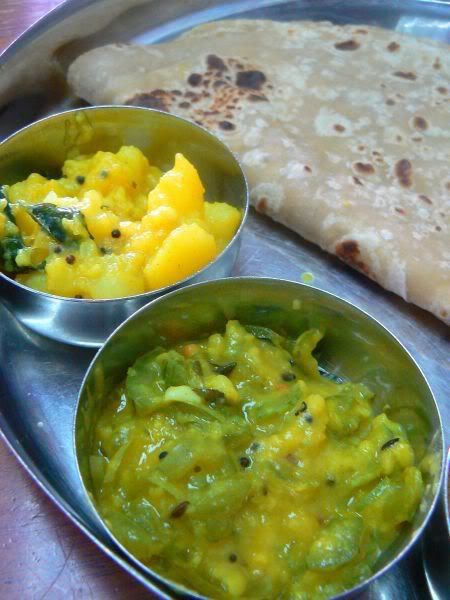
Fijian curries traditionally are on the mild side, but you can ask for it spicy. Curries are easy to figure out from the menu: lamb, goat, beef, chicken, vegetarian. If in doubt, ask the waiter. Curries are normally eaten with the hands, but you can also ask for roti (it is the round, lightly fried bread normally used to pick up your food. It is a hybrid of the round breads of India and Pakistan). Puri is a soft, puffy bread, and papadam is thin and crispy.
The entire meal may come on a round steel plate, with the curries, condiments, and rice in their own dishes arranged on the larger plate. The authentic method of dining is to dump the rice in the middle of the plate, add the smaller portions around it, and then mix them all together.
Wine, Beer and Spirits
Fiji does not produce wine, but Australian & New Zealand wines are common. Australian's have full-bodied, fruit-driven varieties, such as chardonnay, semillon, Riesling, shiraz, Hermitage, cabernet sauvignon, and merlot. New Zealand produces distinctive whites, such as chenin blanc, sauvignon blanc, and soft merlot.
The country does brew the robust Fiji Bitter beer -- or "Stubbie" to locals because of its distinctive short-neck bottles. Fiji Gold is a somewhat lighter version.
With all those sugar-cane fields, it's not surprising that Fiji produces a decent dark rum known as Bounty. A gin is produced here, too, but it's best used as paint thinner.
Freight and import duties drive up the cost of other spirits and all wines, so expect very high prices. You can always bring the two allowed bottles of spirits from the duty-free shops at the airport.
Coffee Lingo
Coffee lovers are in for a treat, for excellent beans are grown in Fiji's mountains. The robust product is darkly roasted and served throughout the country. The Bulaccino and Esquires outlets (similar to Startbrucks) will satisfy your daily caffeine needs.
The coffee lingo spoken in Fiji is different than the EU one. Over here, a short black is an espresso. A long black is two shots of espresso with extra hot water. A flat white is what we call a latte (half espresso, half steamed milk), while a trimmed flat white is a flat white with skim milk. A New Zealand coffee an experience you can not miss: a huge bowl of coffee (I'm sure the Italians will love this one).

Monday, July 28, 2008

Friday, July 11, 2008